Great Dane
The defining training reality is the gap between developmental fragility and adult presence. Great Danes need exercise restriction, not exercise programs, for the first 18 months — no stairs, no jumping in or out of vehicles, no forced running, no high-impact play. Yet they need bombproof obedience by 6 months because by that age they outweigh small adults. The training is mostly impulse control, manners, and structural protection. Get those right and you have one of the gentlest, most rewarding companions in dogdom. Get them wrong and you have a 140-pound dog that jumps on guests, pulls owners off their feet, and develops orthopedic problems before it turns three.
What rewards itself, and what the world pays for
Self-rewarding (nature, harder to change): greeting, social contact, and leaning into people. These feel good on their own.
Paid by the outside world (nurture, easier to change): counter-surfing (the counter is at chin height and the food pays), leash pulling that gets the dog there, and attention-seeking that gets a response. Change the payoff while the dog is still small.
Both stacked (hardest): jumping and leaning on guests. The excitement rewards itself and the attention pays it again. Fearfulness can also build in under-socialized puppies, because avoiding the scary thing pays off every time. Start early: size makes every rehearsal heavier.
How to adapt each topic for your Great Dane
Great Dane puppies are not particularly mouthy compared to working or sporting breeds, but their size means even moderate mouthing produces serious damage. The yelp-and-withdraw method works well because Danes are socially attuned. The bigger concern is preventing rough play that escalates — a 50-pound Dane puppy wrestling with you is fun; a 140-pound adult Dane wrestling with you is dangerous. Set the boundaries early and keep them.
Crate training a Great Dane requires planning around the eventual adult size. Buy the largest crate you can — XXL or custom-built — because a Dane that learns to dislike a too-small crate at 6 months will refuse the larger crate later. Place mats and bedding generously; growing Dane joints need cushioning. Do not crate Danes in spaces where they are exposed to extreme heat — the breed handles heat poorly.
House training Danes is straightforward due to their intelligence and desire to please. Most are reliably trained by 12 to 16 weeks. The size factor cuts both ways — large bladders mean fewer accidents, but accidents that do occur are dramatic. Stay on schedule, use enzymatic cleaner thoroughly, and do not rush trust. A Dane that has had an accident in a room may revisit that spot.
Great Dane puppies sleep enormous amounts — 18 to 20 hours per day is normal for growing puppies, and adult Danes still log 12 to 16 hours of sleep daily. Enforced naps are essential not just for behavior regulation but for proper growth. An overtired, over-exercised Dane puppy is a future orthopedic patient. Crate after any activity. Restrict stairs, jumping, and high-impact play through 18 months. This is not optional.
Danes are naturally social and approach the world with curiosity rather than fear. Socialize broadly and confidently — expose to surfaces, environments, sounds, and people during the 8 to 16 week window. The breed-specific consideration is fearfulness in poorly bred or under-socialized individuals; a fearful Dane is a giant-breed problem with no good solution at adult size. Build environmental confidence aggressively.
Danes are velcro dogs and can develop separation anxiety. They want to be on you, in your lap, leaning against you. Build alone-time tolerance early. The destruction risk if separation anxiety develops is significant given size — a Dane in distress can dismantle interior doors. Pair absences with frozen Kongs and graduated departures.
Danes are intelligent and biddable, comparable to retrievers in trainability but with shorter attention spans and lower drive. Standard positive-reinforcement methods work well. The training priority is impulse control — sit, down, place, leave it, and a rock-solid recall must be locked in by 6 months when the dog's size starts producing real consequences for non-compliance. Sessions of 10 minutes are ideal; Danes mentally fatigue faster than smaller working breeds.
Leash work is the most consequential training topic for Great Danes. A 140-pound dog that pulls can drag a 200-pound adult into traffic. Start loose-leash training the day they come home. Establish handler engagement as the default leash position. Use a front-clip harness for management while training is still in progress. Avoid prong collars on growing puppies until the dog is structurally mature; cervical injury risk is real in giant breeds.
Resource guarding in Danes is uncommon but consequential when it occurs due to bite force and size. Practice trade-ups from week one. The more common issue is unintentional intimidation — Danes do not need to guard, they just exist near the resource and other dogs avoid it. Manage feeding in multi-dog homes carefully.
Reactivity in Danes is uncommon and usually fear-based when it does occur. The most common form is leash reactivity that develops in dogs whose owners avoid social situations because the dog is "too big." Avoidance produces under-exposure produces fearfulness produces reactivity. Continue socialization and exposure throughout the dog's life, not just puppyhood.
Game recommendations for Great Danes
| Status | Game / Activity |
|---|---|
| Recommended | Nosework and snuffle mats — mental exhaustion without physical impact; ideal for growing Danes with growth plate restrictions |
| Recommended | Short structured walks with obedience — engages the body and mind without overworking developing joints |
| Recommended | Trick training and place work — build manners and engagement through stationary work appropriate for the breed's build |
| Limit | Fetch — restrict to flat surfaces, soft impact, and short sessions while the dog is growing; absolutely no fetch on hard surfaces or in patterns that involve sudden stops |
| Avoid | Stairs and jumping for the first 18 months — growth plate damage compounds and produces lifelong orthopedic issues; carry small puppies or use ramps |
| Avoid | Forced running, jogging, or biking — high-impact repetitive exercise on developing joints is a recipe for hip dysplasia and other structural failures |
| Avoid | Dog park rough play — Dane puppies playing with smaller fast dogs experience joint impacts they cannot recover from |
| Avoid | Tug of war — head-whipping strains a growing neck, and grip-and-pull games build bite strength in a dog that will weigh well over 100 pounds |
What Great Dane owners deal with most
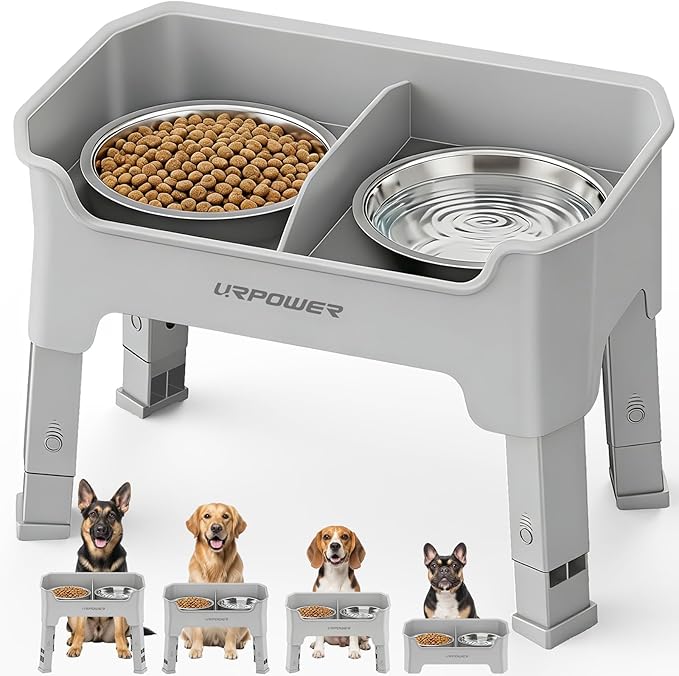
Gear for your Great Dane
What Boston Dogtor actually uses